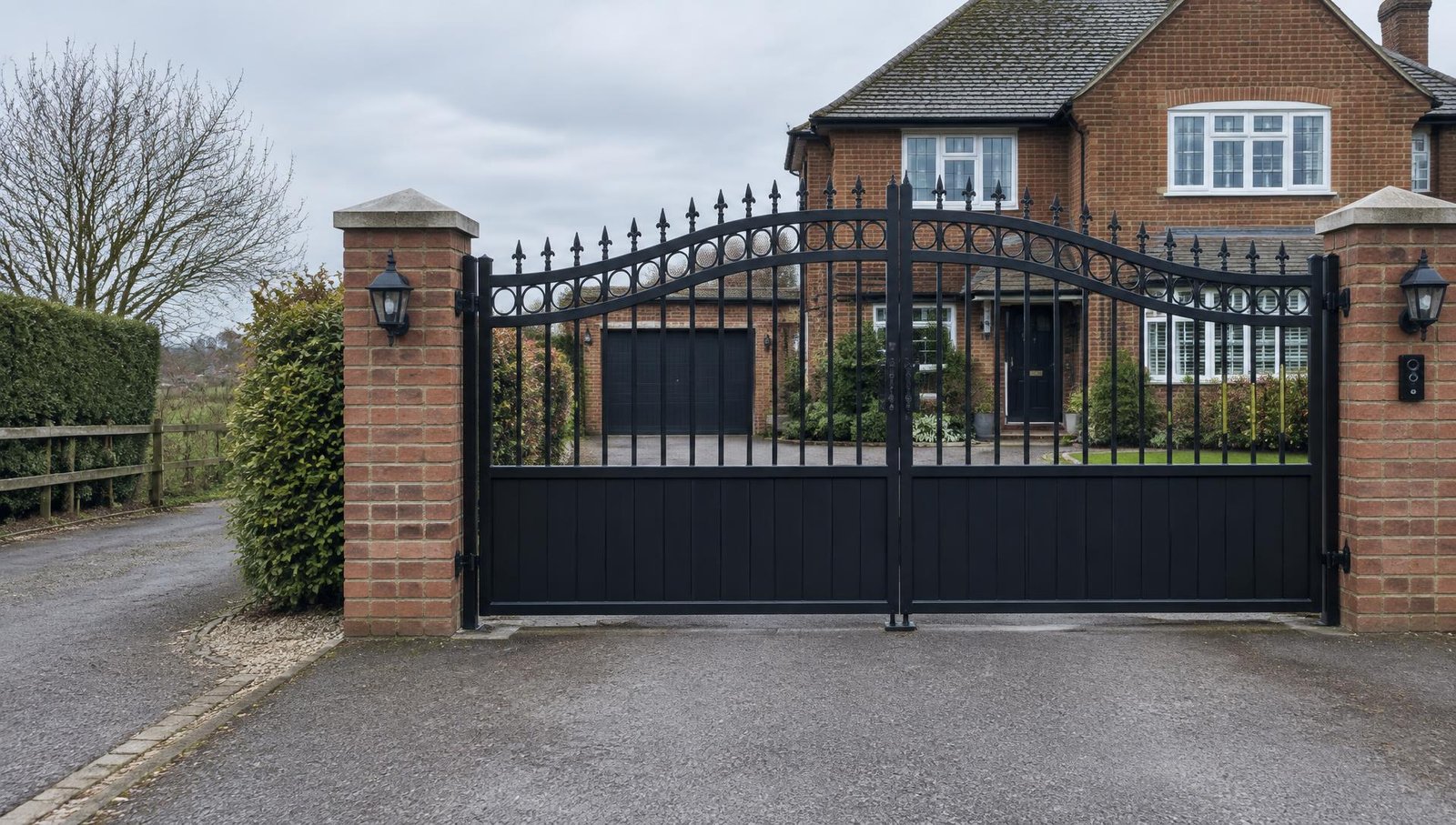


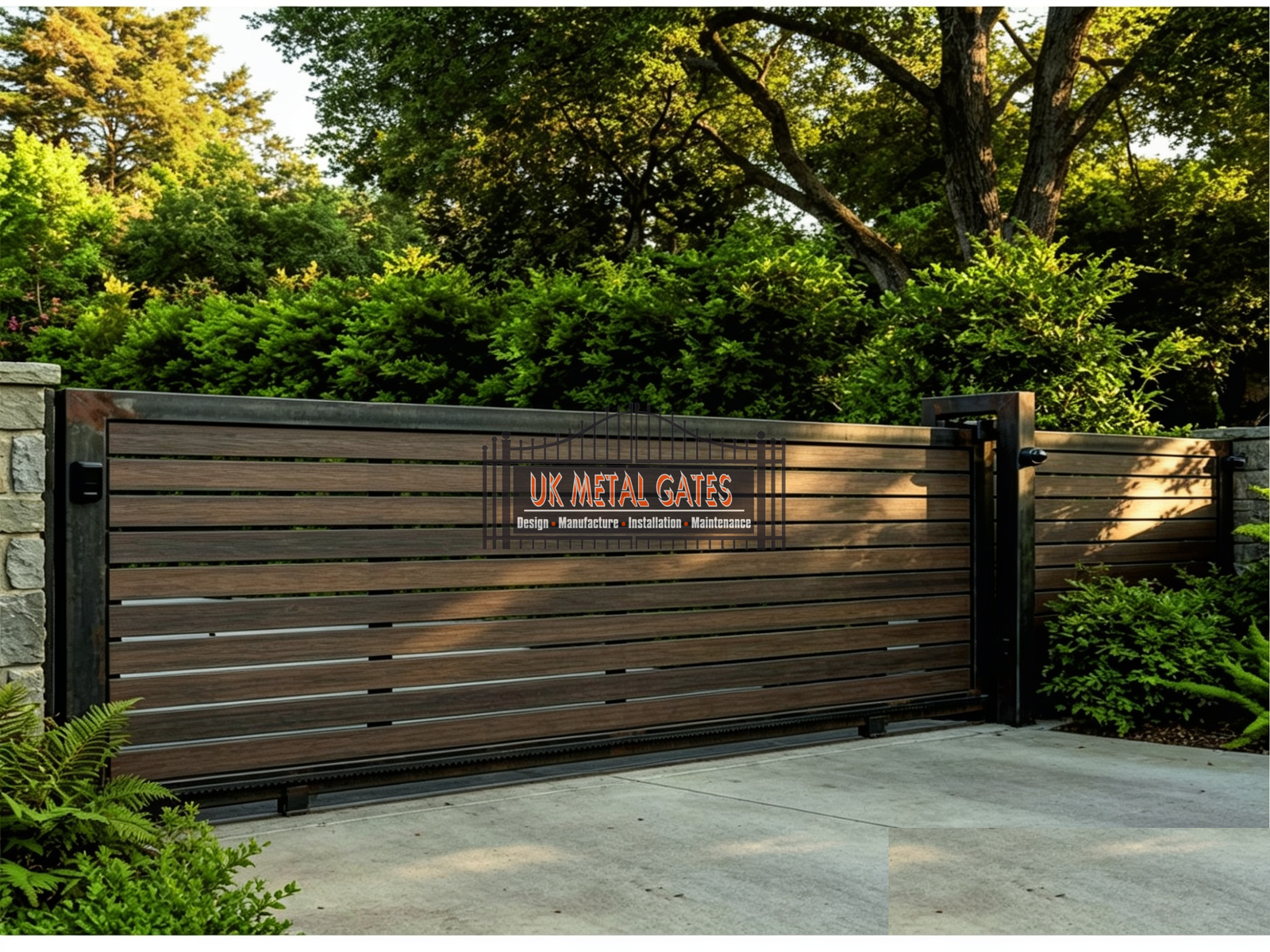
Wood-Composite Horizontal Panel Sliding Gate
Wood-Composite Horizontal Panel Sliding Gate-
£885.01+ Price depends upon SizesView Gate
- Quick View
Composite Driveway Gates | Driveway Gates | CDG13
Composite Driveway Gates | Driveway Gates | CDG13-
£755.51+ Price depends upon SizesView Gate
- Quick View
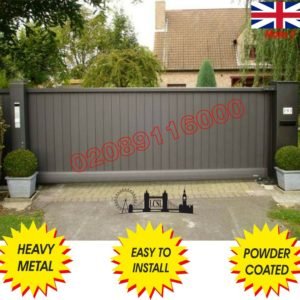
Composite Sliding Gate
Composite Sliding Gate-
£818.08+ Price depends upon SizesView Gate
- Quick View
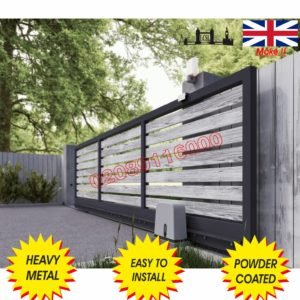
Composite Sliding Gate
Composite Sliding Gate-
£750.19+ Price depends upon SizesView Gate
- Quick View
Tracked or Cantilever
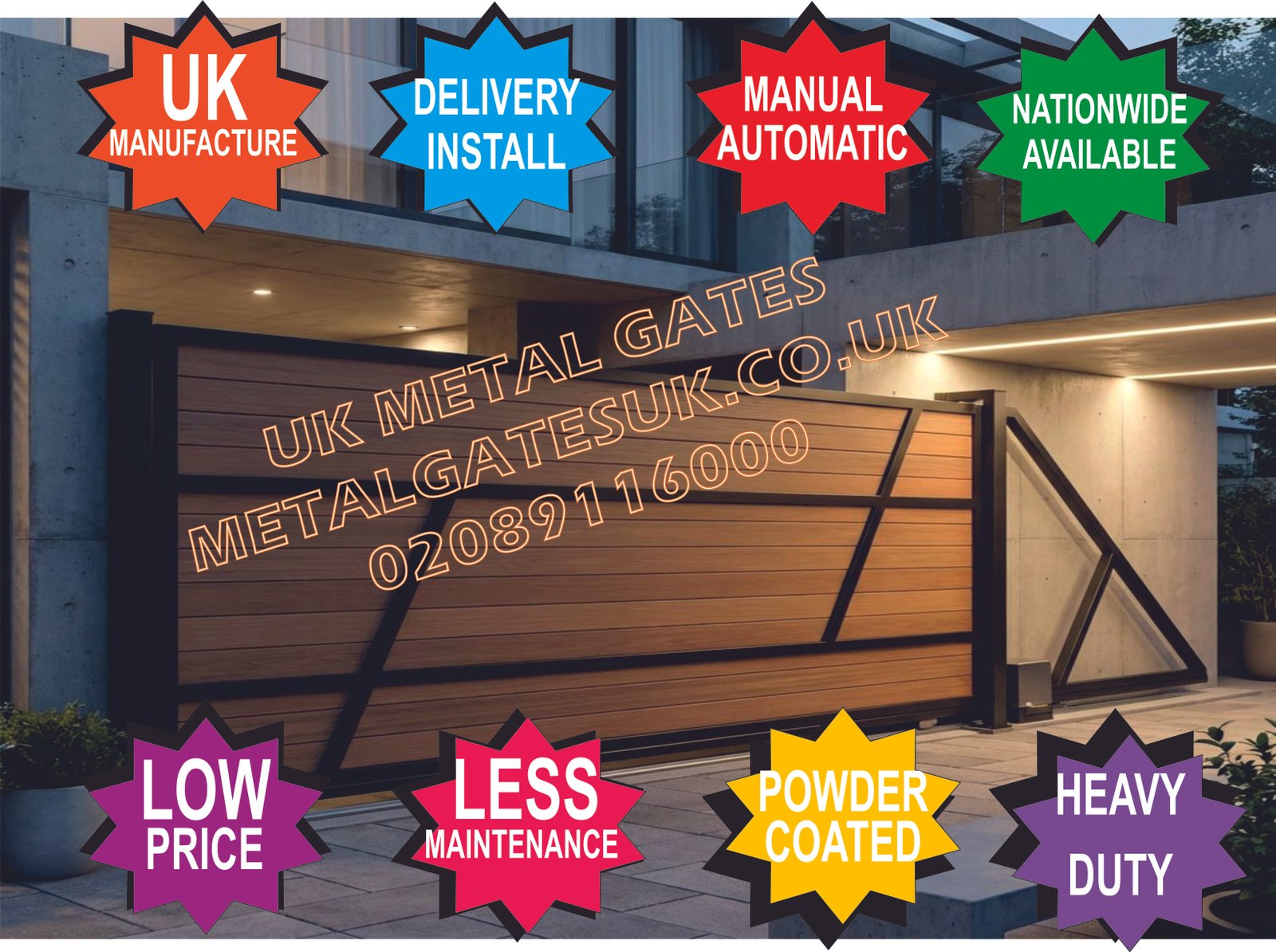
A sliding gate can run one of two ways. A tracked gate rolls along a rail set into the ground across the opening, which works well on level driveways. A cantilever gate has no ground track at all — it’s carried on rollers set to one side, so nothing sits on the ground for debris or standing water to collect in, making it the better option on uneven or gravelled surfaces.
Both systems need clear space to one side of the opening for the gate to retract into; tell us your opening width and available side room and we’ll confirm what works.
Full Privacy Across a Wide Opening
A solid boarded sliding gate blocks sightlines into the driveway completely, in a way that open bar designs can’t — useful where the property faces a busy road or overlooked land. Because the whole gate is boarded rather than framed with open infill, it’s worth mentioning your site’s exposure when you enquire, since a large solid face does catch more wind than an open design and we’ll size the hardware accordingly.
Composite Sliding Gate Options
Every Driveway Design, Built to Slide
Any design across our range can be manufactured as a sliding gate, so the pattern you’ve chosen for the driveway entrance doesn’t have to change just because the gate needs to run sideways instead of swing.
Why Composite for a Sliding Gate
A sliding gate’s base sits close to the ground for its whole length, exactly where a timber gate would take on moisture and eventually swell or rot along the bottom rail. Composite boards don’t have that weakness, so the part of the gate most exposed to standing water and splashback stays sound for the long term, needing nothing more than an occasional wash.
Colours and Board Finishes
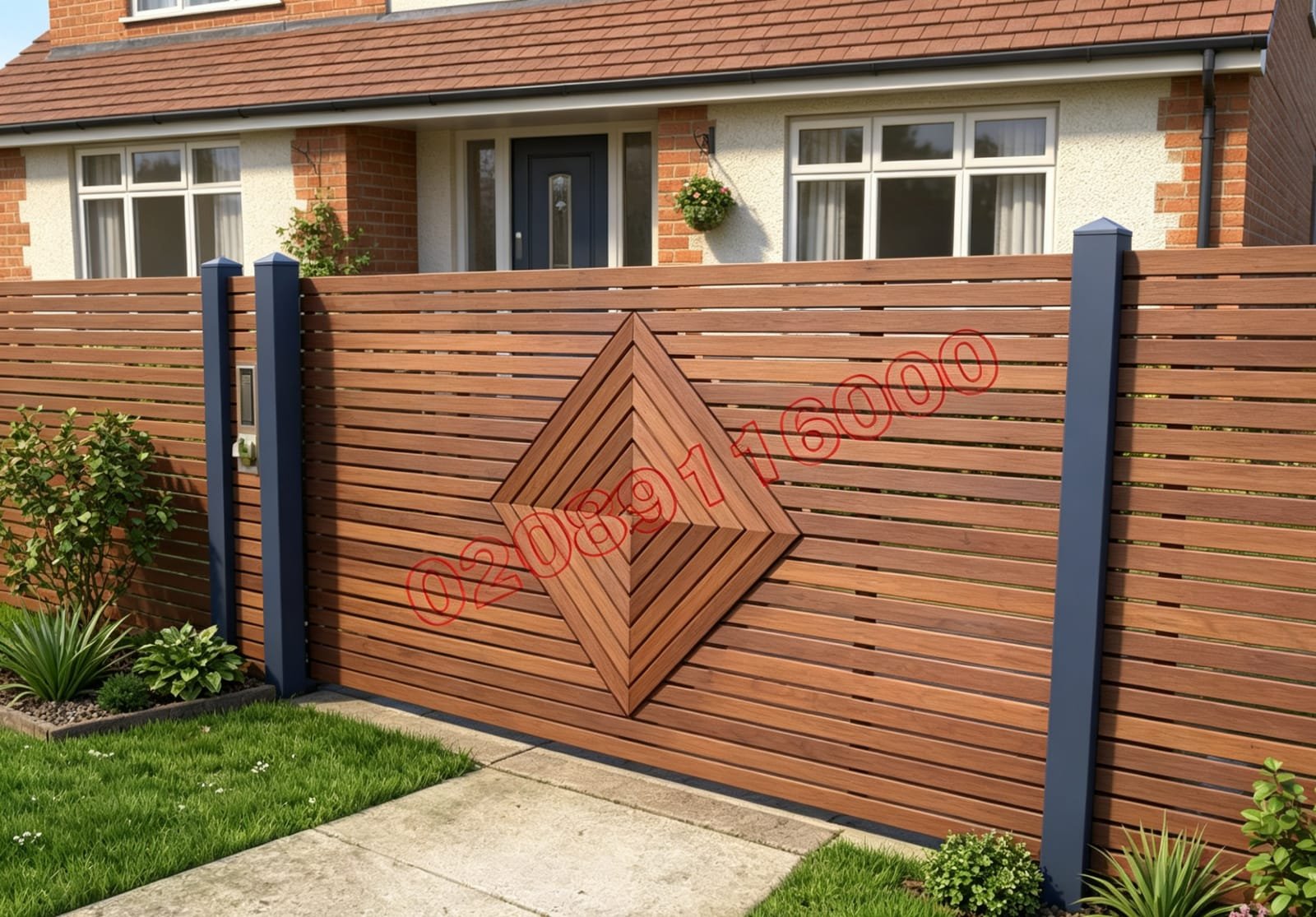
Board options span everything from warm natural oak through to near-black anthracite, giving a wide range between a traditional timber look and a contemporary dark finish. Frame colour is not limited to a fixed palette — any RAL shade is available.
Automation
Composite sliding gates take automation well, running on a straight, repeatable path every time they open. We size the motor and hardware to the finished weight of the gate, and we recommend professional installation for any automated gate — we can handle the whole project, from groundwork through to the automation itself.
Nationwide Delivery, Installation and Automation
From manufacture through to delivery, installation and automation, we cover composite sliding gates the length of the UK. Ring 0208 911 6000 for a free, no-obligation quote.
Frame Materials, Foundations and Maintenance
Composite infill can be fitted within a steel or aluminium frame. Track-guided systems need a level, firm base for the ground track, while cantilever systems need support posts and foundations sized for the finished gate and run-back.
Composite panels should be cleaned with soapy water. The metal frame should be cleaned periodically and moving parts such as rollers and track wheels lubricated.
If a slider does not suit your site, composite bi-fold gates need less side clearance. Our aluminium sliding gates provide an alternative where full privacy is not the priority.
Frequently Asked Questions
How much run-back space does a composite sliding gate need?
The run-back space required is normally the full width of the gate leaf, plus room for the receiver post or end catch. The exact amount depends on whether you choose a cantilever or a track-guided system, so it is best to measure the clear space to the side of your opening and discuss it with us before ordering.
What is the difference between cantilever and track-guided sliding gates?
A track-guided gate runs on a ground track supported by guide rollers, with the gate weight carried by the track wheels. A cantilever gate is supported by posts and rollers offset from the opening, so it does not need a ground track across the driveway. Cantilever systems are often preferred where a ground track could be obstructed by gravel, snow, or uneven surfaces, but they require additional run-back space and a suitable support structure.
How does the composite infill affect the weight of the sliding gate?
Composite infill panels add weight compared with an open metal frame, which means the sliding mechanism, rollers, and motor must be sized to carry that extra load. We account for the full panel weight when specifying the track, rollers, and automation kit, so the gate operates reliably rather than being under-specified for the load.
Can a composite sliding gate be fitted on a sloped driveway?
Sloped driveways can be accommodated, but the approach depends on how pronounced the slope is. A track-guided system can follow a falling or rising line within limits, while a cantilever system needs posts set at a consistent height with the gate leaf running parallel to the ground line. We will ask for site measurements or photos to advise which option is practical for your slope.
Are the composite panels fixed into a steel or aluminium frame?
Both options are available. The metal frame can be steel or aluminium, and the composite infill panels are fixed within that frame. Steel gives a heavier, more rigid structure at a lower material cost, while aluminium reduces overall gate weight, which can be an advantage for the sliding mechanism and automation.
Can a composite sliding gate be automated?
Yes. Sliding gates are particularly well suited to automation because the motor drives the gate along a fixed line. Automation can be ordered with the gate or retrofitted later, provided the gate weight and track system are compatible with the motor you choose.
What foundations or ground preparation are needed for a sliding gate?
Track-guided systems need a level, firm base for the ground track, typically a concrete footing. Cantilever systems need properly set support posts and foundations sized for the gate weight and run-back. We can advise on foundation requirements once the gate width, height, and infill construction are confirmed.
Does the composite infill need different maintenance from the metal frame?
Yes, the two materials are maintained differently. Composite panels should be cleaned with a cloth or sponge and soapy water. The metal frame should also be cleaned periodically, and any moving parts such as rollers and track wheels should be lubricated to keep them working smoothly.
Is a composite sliding gate suitable for a windy or exposed location?
Composite sliding gates can be supplied for windy or exposed locations, but the wind load on a solid infill panel is higher than on an open frame. Contact us with details of your site so we can recommend the best frame construction, panel layout, and track or cantilever system for your conditions.
Get Your Free Composite Sliding Gate Quote
Full privacy. Made to measure. Automation ready.