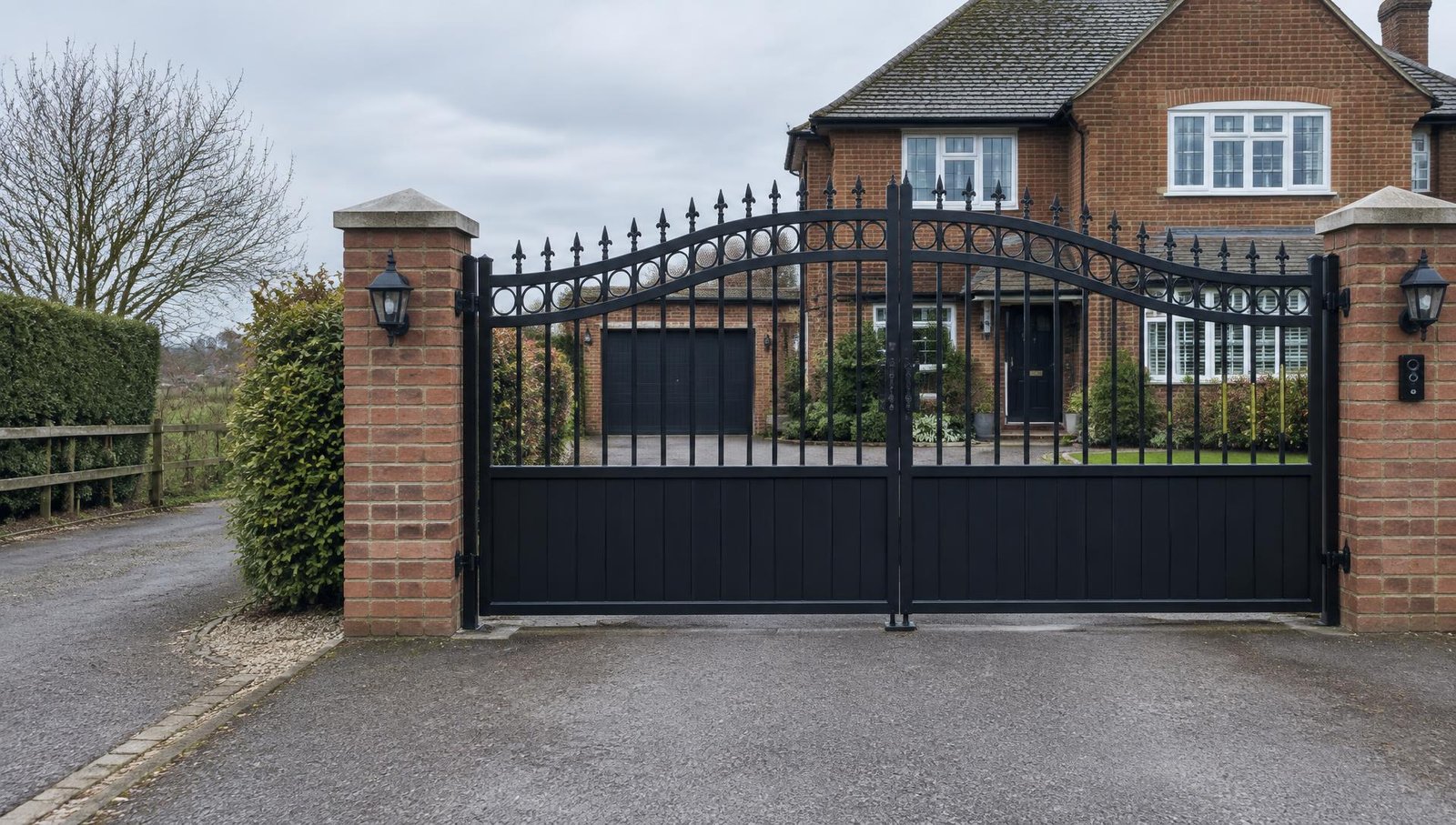


Metal Driveway Gates | Wrought Iron Driveway Gates | Front Driveway Gate | Gates | UKMDG41
Metal Driveway Gates | Wrought Iron Driveway Gates | Front Driveway Gate | Gates | UKMDG41-
£739.86+ Price depends upon SizesView Gate
- Quick View

Metal Sliding Gates | Metal Gates | Sliding Driveway Gates | UKMS4
Metal Sliding Gates | Metal Gates | Sliding Driveway Gates | UKMS4-
£758.70+ Price depends upon SizesView Gate
- Quick View

Metal Alleyway Gates | Footpath Gates | Backyard Gates |Alley Gates |UKMAG2
Metal Alleyway Gates | Footpath Gates | Backyard Gates |Alley Gates |UKMAG2-
£395.98+ Price depends upon SizesView Gate
- Quick View

Metal Alleyway Gates | Footpath Gates | Backyard Gates |Alley Gates |UKMAG1
Metal Alleyway Gates | Footpath Gates | Backyard Gates |Alley Gates |UKMAG1-
£350.25+ Price depends upon SizesView Gate
- Quick View
Designs purpose-built for narrow side entrances
The defining feature of a metal alleyway gate is its taller, leaner proportion — built specifically for pedestrian-width openings rather than vehicle access. You will find open-bar styles that maintain visibility along the passage while still creating a clear boundary between public and private space. This is especially useful for shared or overlooked alleyways where you want security without a solid wall effect.
Tall, slim frames that fit typical 900 mm to 1,200 mm footpath openings
Vertical bar and plain-top designs suited to rear garden and bin-store access
Open infill patterns that preserve natural light and sightlines
Bolt-through locking points compatible with rim locks and nightlatches
Choosing the right alleyway gate for your opening
Inward versus outward swing
Check whether your alleyway slopes, steps, or has obstructions like drainpipes against the wall. An inward-swinging gate keeps the footpath clear for neighbours and passers-by, while an outward swing can work better where internal space is tight — such as a bin storage bay directly behind the gate. All our alleyway gates can be hinged left or right to suit the site.
Privacy level and bar spacing
For bins, bikes, and general storage, closer bar spacing or a mid-rail design limits what passers-by can see. If the gate leads to a well-kept garden that you want to glimpse from the street, a wider-spaced vertical bar pattern opens up the view. Powder-coated aluminium and galvanised steel are both available across this category, with aluminium being the lighter option for high-use daily access.
Materials and fixing point considerations
Alleyway gates almost always fix into brick, rendered block, or stone side walls rather than freestanding posts — so the load-bearing capacity of the wall matters. Aluminium gates reduce the weight on masonry fixings, while steel offers a heavier, more traditional feel in period terraces. Both materials arrive pre-finished in a black or dark grey coating that sits neatly alongside existing railings, brickwork, and timber fencing.
Frequently Asked Questions
What width options are available for alleyway gates?
Alleyway gates are made to measure, so we can produce them in narrow widths typical of side passage access. As a guide, widths around 900mm to 1000mm are common for this application, but we will build to your exact opening measurement once final sizes are confirmed with you.
Can alleyway gates be fitted into existing brick or blockwork openings?
Yes. These gates are typically fixed into tight existing openings between properties using suitable fixings into sound brick or blockwork. We will discuss your specific wall construction and opening dimensions before production to ensure the gate and fixing method are appropriate for your site.
What anti-climb or security features can be included?
Alleyway gates are often specified taller than standard pedestrian gates for security. Options include close vertical bar spacings, flush or near-flush infill panels that offer limited footholds, and designs without horizontal rails on the outward face. We can discuss which configuration best suits your security requirements.
What standard heights are available?
There is no fixed standard height for alleyway gates — they are made to your specified height. Common heights range from around 1.8m to 2.1m, with taller options available where additional security or privacy is needed. The height you choose must be suitable for your opening and any adjacent boundaries.
Can I use my existing gate posts or will new ones be needed?
This depends on the condition and construction of your existing posts. In many cases existing sound posts can be reused, provided they are structurally suitable for the weight and size of the new gate. Contact us with details or photos of your current setup so we can advise on compatibility.
Can alleyway gates be hung left or right-handed?
Yes. Our gates can be hung on either side to suit the layout of your alleyway and the direction you want the gate to open. Specify your preferred hanging side when ordering, and we will build accordingly.
What materials are available for alleyway gates?
We offer steel, aluminium, and metal frame with composite infill panels. Steel is the most common choice for a security-focused alleyway gate due to its strength. Aluminium is a lighter alternative that is naturally corrosion-resistant and easier to automate. A metal frame with composite panels combines structural rigidity with a low-maintenance finish.
Can an alleyway gate be automated?
Yes, swing motor kits can be added to suitable alleyway gates, either at the point of order or retrofitted later. Automation is more straightforward on lighter gates, so aluminium or composite options may be worth considering if automation is a priority. Contact us to check compatibility with your chosen design.
Do I need planning permission for an alleyway gate?
In many cases, replacing or installing a gate within an existing side passage does not require planning permission, provided height and boundary rules are met. However, requirements can vary by location and property type, so we recommend checking with your local planning authority before ordering if you are unsure.
How are alleyway gates delivered?
Gates are delivered fully built and ready to install. We deliver nationwide, though heavier steel gates may require suitable unloading facilities on site. You will need to confirm access arrangements for delivery in advance.