

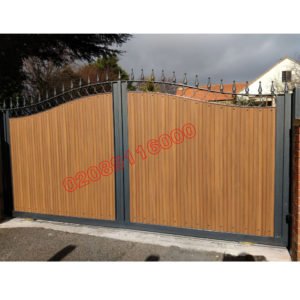
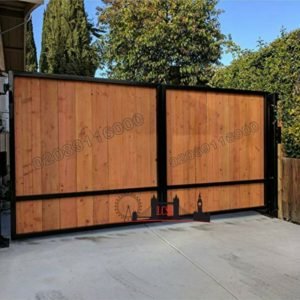
Metal framed driveway gates pair a steel outer frame with an infill of your choice, such as timber boards or composite panels, rather than a solid metal gate face. The frame provides structural strength and keeps the gate square over time, while the infill material determines the overall look.
This differs from a fully composite gate (infill only, no visible metal structure) and from a solid metal gate (steel or aluminium throughout). Gates are made to measure in the UK, available in a range of infill and finish options, and can be supplied manual or automated. Call 02089116000 for a quote.
Frequently Asked Questions
What is a metal framed driveway gate?
A metal framed driveway gate uses a structural frame made from steel or aluminium, with infill boards — typically timber or composite — set within that frame. The metal frame provides rigidity and load-bearing strength, while the infill determines the overall appearance of the gate.
What infill materials can be used within the metal frame?
Common infill options include timber boards and composite boards. Timber gives a traditional, natural finish and can be painted or stained. Composite boards offer a wood-look appearance without the need for regular painting, staining, or treatment. The metal frame carries the structural load in both cases.
How does a metal framed gate differ from a solid metal gate?
A solid metal gate uses metal for both the frame and the visible face. A metal framed gate uses metal only for the structural frame, with timber or composite panels forming the front face. This changes both the look and the weight — an infill gate of the same size may be lighter or heavier depending on the materials chosen, and the frame can be sized to suit the infill rather than the full visual surface.
How does a metal framed gate differ from a pure composite gate?
A pure composite gate typically relies on composite material for most or all of its structure. In a metal framed gate, the steel or aluminium frame handles the structural work, while composite boards are used as infill. This means the frame can be specified for the gate width and hinge loading independently of the infill choice.
Does the metal frame help with long-term shape retention?
The metal frame provides structural rigidity, helping the gate keep its shape over time. This is particularly relevant on wider driveway gates, where sagging or twisting can otherwise become an issue.
Which metal is used for the frame — steel or aluminium?
Both steel and aluminium are available. Steel offers greater strength for a given section size. Aluminium is a strong alternative that is generally more expensive and slightly less strong, but it offers a good balance of durability and lighter weight, which can make automation easier.
Can a metal framed gate with timber or composite infill be automated?
Yes. Swing and sliding motor kits can be added at the time of order or retrofitted. Aluminium-framed gates are lighter and may allow a smaller motor to be specified, but steel-framed gates can also be automated.
Can the frame and infill be finished in different colours?
The visible metal frame can be powder coated in any RAL colour — matt black and anthracite grey are popular choices. Timber infill can be painted or stained separately. Composite infill is supplied in its manufactured finish, so the frame colour should be selected to work with that.
What thickness is the frame section on a metal framed driveway gate?
Frame thickness varies depending on the gate width, height, metal chosen, and infill material specified. Contact us with your gate size and infill preference, and we can confirm the exact frame section for your design before ordering.
Is a metal framed gate suitable for a coastal or exposed site?
We offer gate options suitable for coastal and exposed locations. The metal frame, frame finish, and infill material can all be selected with the site conditions in mind — contact us to discuss your location so we can recommend the most appropriate combination.
Metal Sliding Gates | Metal Gates | Sliding Driveway Gates | UKMS9
Metal Sliding Gates | Metal Gates | Sliding Driveway Gates | UKMS9-
£763.71+ Price depends upon Sizes
- Quick View
Metal Driveway Gates | Wrought Iron Driveway Gates | Front Driveway Gate | Gates |
Metal Driveway Gates | Wrought Iron Driveway Gates | Front Driveway Gate | Gates |-
Original price was: £735.53.£14.90Current price is: £14.90.+ Price depends upon Sizes
- Quick View
