Sliding vs Swing Gates: Which Is Right for Your Driveway?
Choosing between a sliding gate and a swing gate depends on your driveway layout, available space, and how you want your entrance to function. This guide compares both to help you decide.
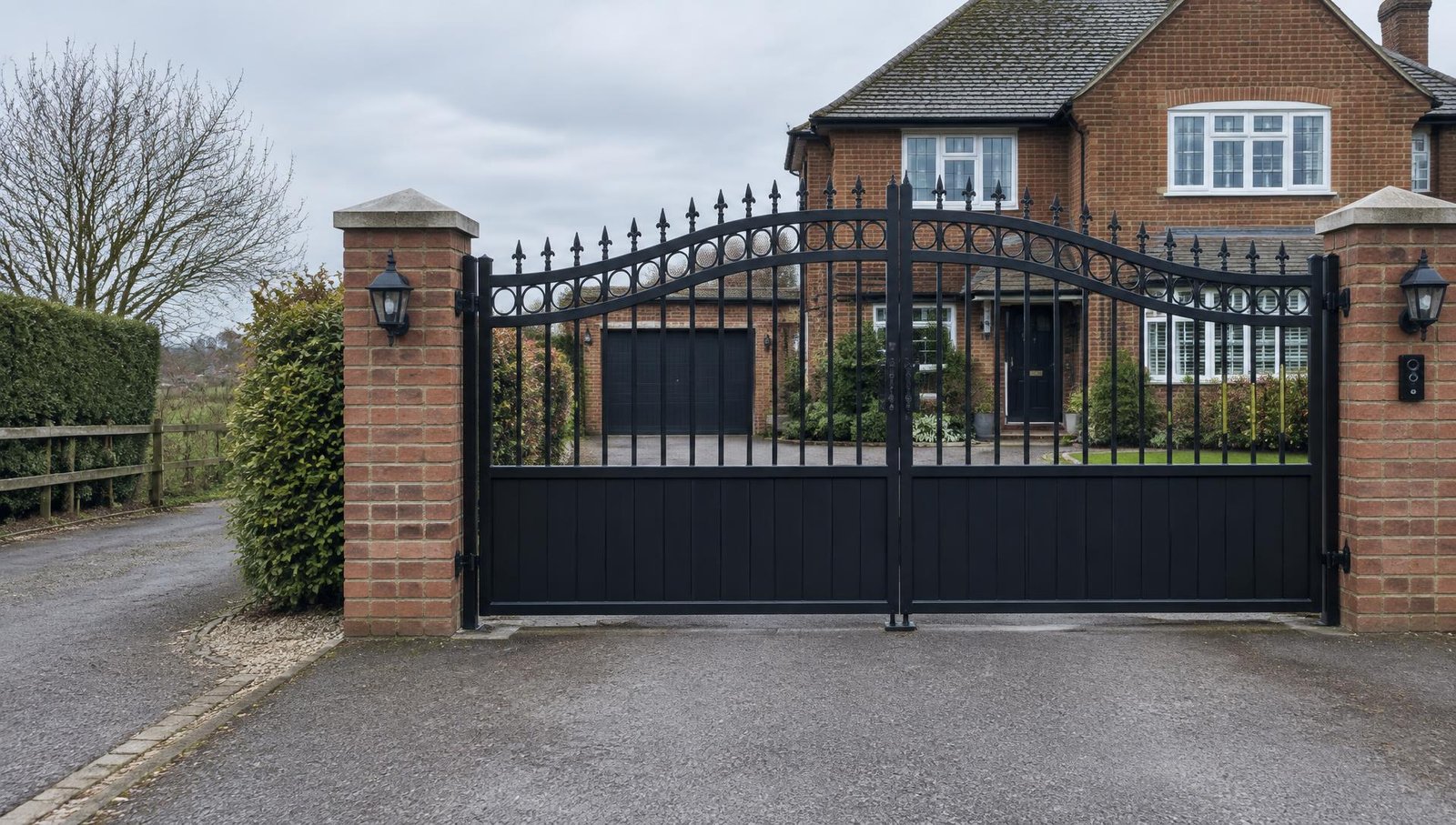
Swing Gates
Pros: Classic, traditional appearance, simpler mechanism, generally lower cost, works well on flat, level driveways
Cons: Requires clear swing radius (space to open inward or outward), less suitable for sloped or uneven ground, can be limited by nearby walls, fences or parked cars
Best for: Traditional properties with open driveway space and no room constraints
Sliding Gates
Pros: Space-efficient (no swing radius needed), ideal for narrow or sloped driveways, smooth automation, modern architectural appearance
Cons: Requires a clear run alongside the driveway for the gate to slide into, slightly more involved installation
Best for: Narrow driveways, sloped properties, modern homes, high-traffic entrances
Which Should You Choose?
- Limited space or a sloped driveway → Sliding gate
- Traditional property with open, flat space → Swing gate
- Want the most contemporary look → Sliding gate
- Prefer the simplest possible mechanism → Swing gate
Once you’ve settled on a gate type, the next decision is material. See our metal vs composite gates comparison to choose the right build for your budget and style.